High Pressure Toilet Cleaning Pump: Complete Guide


High Pressure Toilet Cleaning Pump Price : Complete Guide
Content Index
- What Is a High Pressure Toilet Cleaning Pump?
- How Does a High Pressure Toilet Cleaning Pump Work?
- What Problems Can It Help With?
- Benefits of Using a High Pressure Toilet Cleaning Pump
- How to Use a High Pressure Toilet Cleaning Pump
- High Pressure Toilet Cleaning Pump vs Traditional Toilet Plunger
- When Should You Use a Toilet Cleaning Pump?
- How to Choose a High Pressure Toilet Cleaning Pump
- Common Mistakes to Avoid
- How to Maintain Your Toilet Cleaning Pump
- Frequently Asked Questions
- Conclusion
Introduction
A high pressure toilet cleaning pump is a mechanical bathroom tool designed to use pressure to help loosen or move certain toilet blockages. Unlike a standard toilet brush, which mainly cleans visible surfaces, a pressure-based tool works around the toilet drain and trap. It can be useful when a conventional plunger is not enough. Understanding how these tools work, when to use them, and what to look for can help you choose the right solution for common toilet drainage problems.

What Is a High Pressure Toilet Cleaning Pump?
A high pressure toilet cleaning pump is a pressure-based tool designed to help deal with certain toilet blockages and drainage restrictions.
The basic idea is simple: instead of relying only on manual plunging, the tool uses concentrated pressure to help loosen material inside the toilet’s drainage path.
Depending on the design, the pressure may be created using air or another mechanical pumping system.
The tool is generally intended for situations where a toilet is partially or completely blocked and ordinary plunging may not be providing enough force.
It is important to understand that a toilet cleaning pump is not a replacement for every plumbing tool.
A brush is useful for surface cleaning.
A traditional plunger is useful for many common clogs.
A high pressure toilet cleaning pump can provide another mechanical option when stronger pressure is appropriate.
For serious or recurring plumbing problems, professional inspection may still be necessary.
How Does a High Pressure Toilet Cleaning Pump Work?
A pressure-based toilet cleaner works by directing force toward the blocked drainage area.
When the tool is positioned correctly over the toilet outlet, pressure can be generated and transferred through the water inside the toilet.
That pressure may help loosen or move material restricting the drain.
The basic process
- Position the tool correctly.
- Create a suitable seal around the toilet opening.
- Generate pressure according to the product instructions.
- Allow the pressure to work against the blockage.
- Check whether the water begins to drain normally.
- Repeat only as recommended by the manufacturer.
The effectiveness depends on several factors.
These include:
- The type of blockage
- The location of the blockage
- How severe the blockage is
- The design of the pump
- The seal created around the drain
- The condition of the plumbing
A pressure-based tool may be useful for a blockage close to the toilet trap, but it cannot fix a damaged pipe or every type of deep plumbing obstruction.
What Problems Can It Help With?
A high pressure toilet cleaning pump can be useful for certain common toilet drainage problems.
Minor Toilet Blockages
A partial blockage can cause the toilet to drain slowly.
A pressure-based tool may help loosen material and restore normal drainage.
Stubborn Toilet Clogs
Some clogs do not respond well to ordinary plunging.
In such cases, a high pressure toilet clog remover may provide a stronger mechanical approach.
Toilet Drain Restrictions
If water moves through the toilet slowly because something is restricting the drain, pressure may help move the obstruction.
However, slow drainage can also have causes outside the toilet itself.
Repeated Minor Blockages
If a toilet frequently develops minor blockages, having a suitable mechanical tool available can make basic maintenance more convenient.
However, repeated clogs should not simply be treated over and over without considering the underlying cause.
A recurring problem can indicate a deeper plumbing issue.
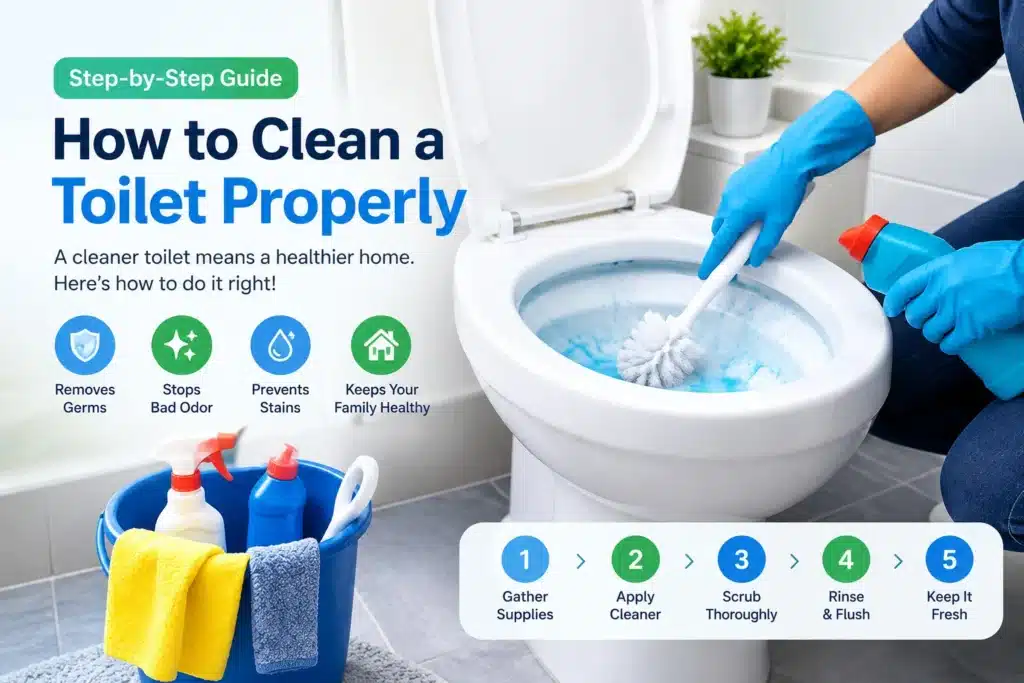
Read the article – How to clean a toilet?
Benefits of Using a High Pressure Toilet Cleaning Pump
There are several reasons homeowners may choose a pressure-based toilet cleaning tool.
Strong Mechanical Pressure
One major advantage is the ability to generate more concentrated pressure than some traditional manual plungers.
This can be useful for certain stubborn blockages.
No Need to Rely Only on Chemicals
A mechanical toilet blockage solution works differently from chemical drain cleaners.
Instead of dissolving the blockage with chemicals, pressure attempts to loosen or move the obstruction.
That can make a mechanical approach useful for certain physical blockages.
Reusable
A quality toilet cleaning pump can generally be used more than once.
This makes it a practical tool to keep available for future bathroom maintenance.
Easy to Store
Many household toilet blockage tools are relatively compact.
They can be stored with other bathroom or cleaning supplies and used when needed.
Useful for Emergency Situations
A blocked toilet can happen unexpectedly.
Having a suitable tool available means you can attempt to deal with a simple blockage without immediately searching for a plumber.
How to Use a High Pressure Toilet Cleaning Pump
Correct positioning is important when using any pressure-based plumbing tool.
Before starting, read the manufacturer’s instructions.
Step 1: Stop Repeated Flushing
If the toilet is blocked and the water level is high, do not keep flushing.
Repeated flushing can increase the risk of an overflow.
Step 2: Check the Water Level
Make sure the water level is suitable for the tool and situation.
If necessary, allow the water level to settle before proceeding.
Step 3: Position the Tool
Place the pressure tool over the toilet drain according to its design.
A good seal is important because it helps transfer pressure toward the blockage rather than allowing air or water to escape around the edges.
Step 4: Apply Pressure
Operate the pump using controlled movements.
Do not use excessive force.
Follow the product’s recommended procedure rather than trying to generate the maximum possible pressure.
Step 5: Check Drainage
After applying pressure, observe the water level.
If the water begins draining normally, the blockage may have loosened.
Step 6: Test Carefully
Once the water has drained normally, check the toilet’s operation carefully.
Avoid immediately repeating multiple flushes if you are unsure whether the blockage has completely cleared.
Read the article – How to unclog a toilet?
High Pressure Toilet Cleaning Pump vs Traditional Toilet Plunger
A traditional toilet plunger remains a useful tool for many everyday clogs.
A pressure-based toilet cleaning pump takes a somewhat different approach.
| Feature | Traditional Toilet Plunger | High Pressure Toilet Cleaning Pump |
| Main action | Manual plunging | Pressure-based action |
| Typical use | Common toilet clogs | Certain stubborn blockages |
| Pressure | Created manually | Designed to generate concentrated pressure |
| Operation | Simple push-and-pull action | Depends on pump design |
| Storage | Usually compact | Usually compact |
| Learning curve | Low | Low to moderate |
| Best approach | Start with common clogs | Useful when stronger pressure may help |
Neither tool is automatically suitable for every situation.
A traditional plunger can be a sensible first tool for a simple blockage.
A high pressure toilet plunger or toilet cleaning pump can be considered when additional pressure is needed.
The most important factor is matching the tool to the problem.
When Should You Use a Toilet Cleaning Pump?
A pressure-based toilet cleaner may be worth considering when:
- The toilet drains slowly.
- A normal plunger has not solved a minor blockage.
- The blockage appears to be mechanical.
- You want a reusable bathroom plumbing tool.
- You want an alternative to relying on chemical drain products.
- Your household occasionally experiences toilet clogs.
However, there are situations where you should stop trying to solve the problem yourself.
Professional help may be appropriate when:
- The toilet repeatedly becomes blocked.
- Several drains are affected at the same time.
- Water backs up into other fixtures.
- You suspect a damaged pipe.
- A foreign object is stuck deep inside.
- The blockage does not clear after reasonable attempts.
- There is a leak or another plumbing fault.
A toilet cleaning pump is a tool for certain blockage situations, not a universal solution for every plumbing problem.
How to Choose a High Pressure Toilet Cleaning Pump
If you are considering buying a high pressure toilet cleaning pump, look beyond the word “high pressure.”
A useful tool should also be practical, compatible, and easy to operate.
- Check the Design
Look at how the pump connects to the toilet drain.
A design that creates a secure seal can help transfer pressure more effectively.
- Consider Ease of Use
A good household tool should not require complicated procedures.
Look for clear operating instructions and a design that is comfortable to handle.
- Check the Materials
The tool should be made from materials suitable for repeated household use.
Pay attention to the quality of the pump body, seals, handles, and other components.
- Consider Different Toilet Designs
Not every toilet has exactly the same shape or drain configuration.
Check whether the product is suitable for your toilet before purchasing.
- Look at Cleaning and Storage
A bathroom tool should be easy to clean after use.
Compact storage can also be useful, especially in smaller bathrooms.
- Check the Product Instructions
Clear instructions are an important part of a useful plumbing tool.
Before buying, check what the manufacturer recommends regarding operation, compatible toilets, pressure, and maintenance.
Common Mistakes to Avoid
Even a good high pressure toilet cleaning pump needs to be used correctly.
Applying Excessive Pressure
More pressure does not automatically mean better results.
Excessive force can potentially damage plumbing components.
Use controlled pressure and follow the product instructions.
Using It Without a Proper Seal
If the tool does not create a suitable seal, pressure can escape rather than working toward the blockage.
Positioning matters.
Repeatedly Flushing a Blocked Toilet
Do not continue flushing when the toilet is already blocked.
This can increase the water level and create an overflow risk.
Using the Wrong Tool
A tool designed for a sink or another drain may not be suitable for a toilet.
Use a product designed for the specific application.
Ignoring Recurring Blockages
If the same toilet keeps becoming blocked, repeatedly using a clog remover may only address the symptom.
The underlying plumbing problem may need professional attention.
Mixing Cleaning Chemicals
Never mix different cleaning chemicals unless their instructions specifically say the combination is safe.
Chemical reactions can produce harmful fumes.
How to Maintain Your Toilet Cleaning Pump
Proper maintenance can help keep your bathroom tool ready for future use.
Clean It After Use
Rinse and clean the tool according to the manufacturer’s instructions.
Allow it to dry properly before storage.
Check Seals and Moving Parts
If the pump has rubber seals or moving components, inspect them periodically for visible wear or damage.
Store It Properly
Keep the tool in a clean, dry location.
Avoid storing it where it can be damaged by excessive heat or other household chemicals.
Follow Manufacturer Instructions
Different designs require different maintenance.
Always follow the instructions supplied with your particular model.
Frequently Asked Questions
- What is a high pressure toilet cleaning pump?
A high pressure toilet cleaning pump is a mechanical tool designed to use pressure to help loosen or move certain toilet blockages and drainage restrictions.
- Does a high pressure toilet cleaning pump work on every clog?
No. Its effectiveness depends on the type, location, and severity of the blockage. It cannot repair damaged pipes or solve every deep plumbing problem.
- Is a high pressure toilet cleaning pump better than a normal plunger?
They use different approaches. A traditional plunger is useful for many common clogs, while a pressure-based pump can provide stronger or more concentrated pressure for certain blockages.
- Can I use a toilet cleaning pump instead of chemicals?
A mechanical toilet cleaning pump provides a non-chemical approach to certain physical blockages. However, the appropriate solution depends on the cause of the blockage.
- Can a high pressure toilet cleaner damage a toilet?
Incorrect use or excessive force may potentially damage plumbing components. Always use the tool according to its instructions and avoid applying unnecessary pressure.
- How do I use a high pressure toilet clog remover?
Position the tool correctly over the toilet drain, create an appropriate seal, and apply controlled pressure according to the manufacturer’s instructions. Then check whether the water drains normally.
- How can I prevent toilet blockages?
Avoid flushing unsuitable materials, use reasonable amounts of toilet paper, keep foreign objects away from the toilet, and address slow drainage before it becomes a major blockage.
- When should I call a plumber instead?
Consider professional help when the blockage repeatedly returns, affects multiple drains, involves a suspected damaged pipe, causes leaks, or does not clear after reasonable attempts.
Conclusion
A high pressure toilet cleaning pump can be a useful household plumbing tool for dealing with certain toilet blockages and drainage restrictions. By using pressure instead of relying solely on manual plunging or chemical products, it offers another practical approach to common toilet problems.
The key is knowing what the tool can—and cannot—do.
For a simple blockage, a traditional toilet plunger may be enough. When stronger pressure is appropriate, a pressure-based toilet clog remover can provide another option. However, recurring or serious plumbing problems should not be ignored.
Choose a tool with a practical design, suitable materials, clear instructions, and compatibility with your toilet. Most importantly, use controlled pressure and follow the manufacturer’s directions.
With the right tool and good toilet maintenance habits, many everyday drainage problems can be handled more efficiently.