
How to Clean a Toilet Properly: Step-by-Step Guide & Tips

How to Clean a Toilet Properly: Step-by-Step Guide & Tips
Content Index
- Why Regular Toilet Cleaning Matters
- How Often Should You Clean a Toilet?
- How to Clean a Toilet Properly
- Prepare Your Cleaning Supplies
- Clean the Toilet Bowl
- Clean Under the Rim
- Clean the Toilet Seat and Lid
- Clean the Outside of the Toilet
- Rinse and Finish
- How to Remove Common Toilet Stains
- How to Clean a Toilet With a Toilet Cleaning Pump
- Toilet Cleaning Pump vs Traditional Cleaning Methods
- How to Keep Your Toilet Clean for Longer
- Common Toilet Cleaning Mistakes
- Frequently Asked Questions
- Conclusion
Introduction
Knowing how to clean a toilet properly is important for everyday bathroom hygiene, appearance, and maintenance. A quick wipe may remove surface dirt, but a thorough toilet cleaning also pays attention to the bowl, rim, seat, exterior, and surrounding floor. With the right cleaning tools and a simple routine, you can remove common stains, reduce buildup, control unpleasant odors, and keep your toilet looking cleaner for longer.
Why Regular Toilet Cleaning Matters
The toilet is one of the most frequently used fixtures in a home. Because of that, it can quickly collect dirt, mineral deposits, and other buildup.
Regular cleaning helps keep the bathroom fresh and makes larger cleaning jobs easier.
A clean toilet can also make it easier to notice potential plumbing problems. For example, unusual water levels, slow drainage, stains that return quickly, or repeated blockages may indicate an issue that needs more attention.
However, toilet cleaning and toilet unclogging are not exactly the same thing.
Cleaning focuses mainly on removing dirt, stains, buildup, and residue from surfaces. Unclogging deals with material blocking the toilet drain or trap.
If your toilet is not draining properly, first address the blockage instead of simply adding more cleaning products.
How Often Should You Clean a Toilet?
The ideal cleaning schedule depends on how frequently the bathroom is used.
For a regularly used household toilet, a quick surface clean during the week and a more thorough cleaning at least once a week can be a practical routine.
You may need to clean more frequently when:
- Several people use the same bathroom
- The toilet develops visible stains quickly
- Hard water causes mineral buildup
- There are unpleasant odors
- The bathroom has heavy daily use
- Someone in the household is ill
Regular maintenance is easier than waiting until heavy buildup becomes difficult to remove.
How to Clean a Toilet Properly
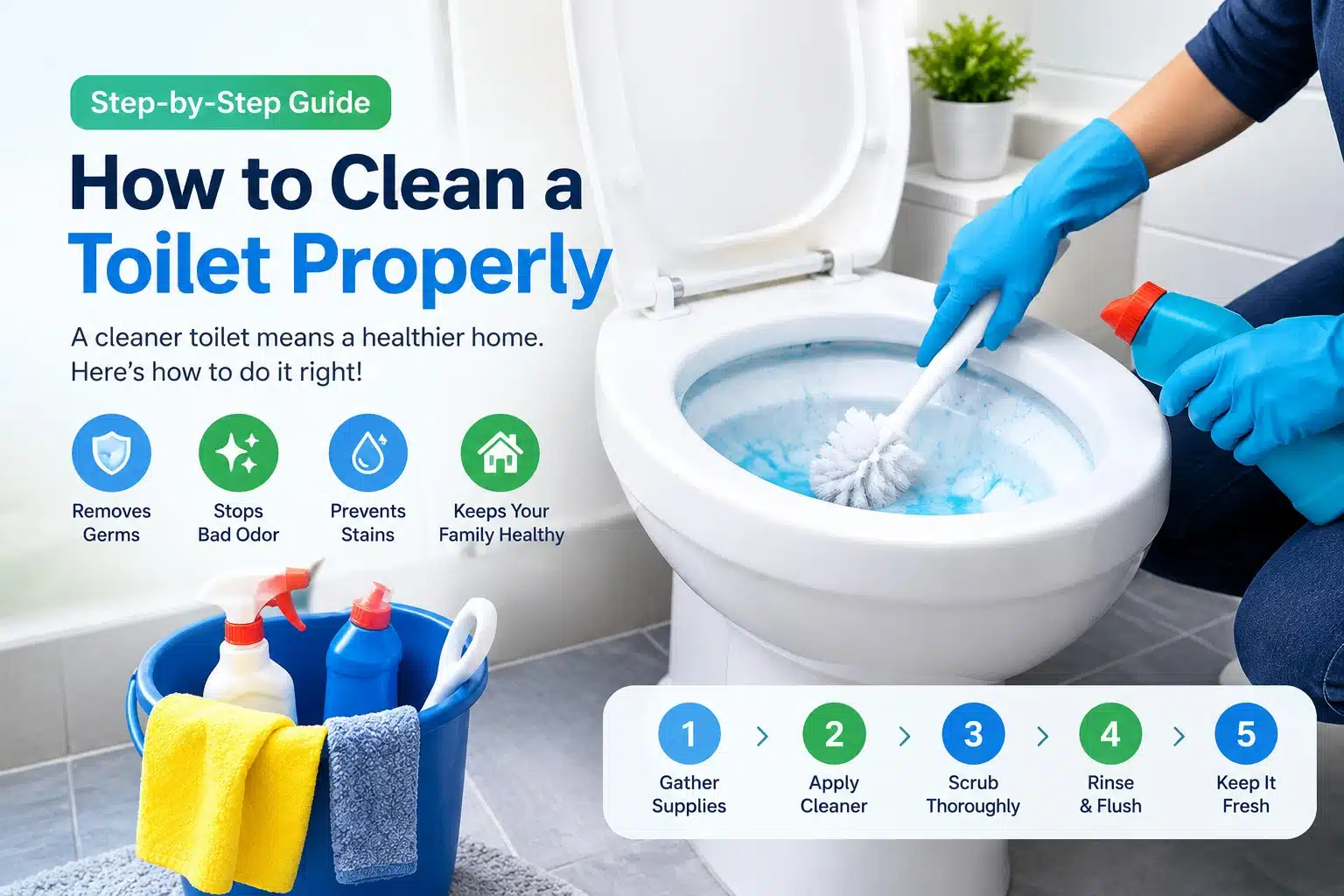
The best way to clean a toilet is to work from the cleaner areas toward the dirtier areas and use separate tools for different surfaces when possible.
Prepare Your Cleaning Supplies
Before starting, gather the items you need.
A basic toilet-cleaning setup may include:
- Toilet bowl cleaner suitable for your toilet
- Toilet brush
- Cleaning cloths or disposable wipes
- Household cleaning gloves
- A suitable bathroom cleaner
- A bucket or water source
- A toilet cleaning pump when needed
- A separate tool for cleaning the surrounding floor
Read the label of any commercial cleaning product before use and follow its instructions.
Never mix different cleaning chemicals together. Some combinations can create dangerous fumes.
Good preparation makes the cleaning process faster and reduces the need to stop midway.
Clean the Toilet Bowl
Start with the inside of the toilet bowl.
Apply a suitable toilet bowl cleaner according to the product instructions. Pay particular attention to areas where stains or buildup are visible.
Allow the product to work for the recommended time.
Then use a toilet brush to scrub the inside of the bowl. Move the brush around the sides and toward the lower part of the bowl.
Give extra attention to areas with visible marks.
After scrubbing, flush if appropriate for the cleaning product you used.
If the toilet has a partial blockage or the water does not drain normally, do not repeatedly flush. Deal with the drainage problem first.
Clean Under the Rim
The area underneath the toilet rim is easy to overlook.
Water passes through this area during flushing, so dirt and mineral deposits can accumulate there over time.
Apply an appropriate cleaner to the rim area and scrub carefully with a suitable brush.
Make sure you reach around the rim rather than cleaning only the visible front section.
This small step can make a noticeable difference to overall toilet cleanliness.
Clean the Toilet Seat and Lid
Next, clean the seat and lid.
Use a suitable bathroom cleaner and a clean cloth. Wipe both the top and underside of the seat, paying attention to hinges and edges where dirt can collect.
Do not use an abrasive product unless the toilet manufacturer’s instructions specifically allow it. Harsh scrubbing can damage certain surfaces.
After cleaning, wipe away remaining product according to the cleaner’s instructions.
Clean the Outside of the Toilet
The exterior of the toilet also needs attention.
Clean:
- The flush area
- Toilet tank exterior
- Sides of the toilet
- Base
- Hinges
- Nearby surfaces
Use a separate clean cloth for the exterior when possible.
The base of the toilet deserves special attention because dust, moisture, and cleaning residue can collect around it.
Clean the Surrounding Floor
Finally, clean the floor around the toilet.
Pay particular attention to the area directly in front of and beside the toilet.
A clean toilet can still make a bathroom feel dirty if the surrounding floor has dust or residue.
Allow surfaces to dry properly after cleaning.
Read : How to unclog a toilet?
How to Remove Common Toilet Stains
Different stains can have different causes.
Yellow or Brown Stains
Yellow or brown marks may develop from mineral deposits, hard water, or repeated exposure to residue.
Regular cleaning can help prevent these marks from becoming heavy buildup.
For stubborn mineral deposits, use a cleaning product designed for the type of buildup and follow the manufacturer’s instructions.
Limescale and Mineral Buildup
Hard water contains minerals that can leave deposits inside a toilet.
Over time, these deposits may become difficult to remove with ordinary cleaning.
Avoid aggressive scraping that could damage the ceramic surface.
Instead, choose a suitable limescale or mineral-deposit cleaner and use it according to its instructions.
Dark Marks
Dark marks can result from different sources, including buildup, dirt, or deposits.
Do not automatically assume that stronger chemicals are the answer.
Start with normal cleaning and gentle mechanical action. If the stain remains, identify the likely cause before choosing a stronger treatment.
High pressure toilet plunger
How to Clean a Toilet With a Toilet Cleaning Pump
A toilet cleaning pump can be useful when cleaning involves more than surface dirt.
For example, a toilet may have slow drainage, residue around the drain area, or a developing blockage.
A high pressure toilet cleaning pump is designed to use pressure to help move or loosen material inside the toilet’s drainage path, depending on the product design.
This makes it different from an ordinary toilet brush.
A toilet brush mainly cleans the bowl’s surfaces. A pressure-based cleaning pump is intended to address problems around the drain or blockage area.
When a Toilet Cleaning Pump May Be Useful
A pressure-based tool may be useful when:
- Water drains more slowly than usual
- A minor blockage is developing
- A conventional plunger is not providing enough pressure
- You want a mechanical alternative for certain blockage situations
- Material may be restricting the toilet drain
Always check the tool’s instructions before use.
Position the tool correctly and use controlled pressure. Avoid excessive force, especially if you are unsure about the condition of the plumbing.
If the toilet has a serious blockage, repeated backups, or another plumbing problem, a professional inspection may be more appropriate.
Toilet Cleaning Pump vs Traditional Cleaning Methods
Different tools perform different jobs.
| Cleaning Method | Main Purpose | Best Used For |
| Toilet brush | Surface cleaning | Bowl and visible residue |
| Bathroom cloth | Wiping | Seat, lid, tank and exterior |
| Toilet bowl cleaner | Chemical cleaning | Stains and surface buildup |
| Traditional plunger | Creating manual pressure | Common toilet clogs |
| High pressure toilet cleaning pump | Pressure-based cleaning/blockage assistance | Certain stubborn drainage problems |
The key is to use the right tool for the right task.
A toilet brush cannot replace a plunger when the drain is blocked. Likewise, a pressure-based toilet cleaning pump is not designed to replace ordinary surface cleaning.
Using different tools as part of a complete bathroom maintenance routine can make toilet care more efficient.
How to Keep Your Toilet Clean for Longer
Once you know how to clean a toilet, the next step is preventing dirt and buildup from returning quickly.
Flush Appropriately
Only flush materials that are suitable for your plumbing system.
Avoid flushing objects, excessive paper, wipes, and other materials that can contribute to toilet blockages.
Clean Small Marks Early
Do not wait until stains become heavy.
A quick cleaning routine can prevent small marks from developing into difficult buildup.
Watch the Water Flow
Pay attention to how your toilet flushes.
If the water starts draining slowly or the toilet makes unusual sounds, investigate the issue early.
A developing drainage problem can become more difficult if ignored.
Keep the Toilet Dry When Possible
Excess moisture around the toilet can contribute to an untidy bathroom environment.
Wipe up unnecessary water around the toilet and keep the surrounding area reasonably dry.
Keep Suitable Cleaning Tools Nearby
A toilet brush, suitable cleaner, and basic blockage tool can help you deal with everyday problems quickly.
For homes where toilet blockages happen regularly, keeping a suitable high pressure toilet cleaning pump available may be practical.
High Pressure Toilet Cleaning
Common Toilet Cleaning Mistakes
Cleaning Only the Toilet Bowl
The bowl is important, but it is not the only part that needs cleaning.
The seat, lid, rim, flush area, exterior, base, and nearby floor should also be included in a complete cleaning routine.
Ignoring the Rim
The underside of the rim can collect buildup and is easy to miss.
Make it part of your regular cleaning process.
Using Too Much Cleaning Product
More cleaner does not necessarily mean better cleaning.
Follow the product’s recommended amount and contact time.
Mixing Cleaning Chemicals
Never mix cleaning chemicals unless the manufacturer specifically states that the combination is safe.
Different products can react with each other and create harmful fumes.
Using Excessive Scrubbing Force
Hard scrubbing can damage some toilet surfaces.
Start with an appropriate cleaner and gentle mechanical action before using a more aggressive method.
Ignoring Slow Drainage
A toilet that drains slowly may have a developing blockage.
Cleaning the bowl will not necessarily solve a drainage problem.
If you notice repeated slow drainage, investigate the cause instead of repeatedly flushing.
Frequently Asked Questions
- What is the best way to clean a toilet?
Start with the toilet bowl, then clean underneath the rim, seat, lid, exterior, base, and surrounding floor. Use suitable cleaning products and tools according to their instructions.
- How often should you clean your toilet?
For a commonly used household toilet, regular light cleaning during the week and a more thorough cleaning at least once a week can be a practical routine. Heavily used bathrooms may require more frequent cleaning.
- How do you remove hard water stains from a toilet?
Use a product designed for mineral or limescale deposits and follow its instructions. Avoid aggressive scraping that could damage the toilet surface.
- Can a toilet cleaning pump help with a blockage?
A pressure-based toilet cleaning pump may help with certain blockages or drainage restrictions. Its effectiveness depends on the type and location of the blockage and the specific design of the tool.
- Is a toilet brush enough for complete toilet cleaning?
No. A toilet brush is mainly designed for cleaning the bowl. Complete toilet cleaning should also include the rim, seat, lid, exterior, base, and surrounding bathroom area.
- How can I prevent toilet blockages?
Avoid flushing unsuitable materials, use reasonable amounts of toilet paper, keep foreign objects away from the toilet, and address slow drainage early.
- What should I do if my toilet keeps getting dirty or blocked?
First, identify whether the problem is surface buildup or a drainage issue. Regular cleaning can help with stains, while repeated blockages may require a suitable mechanical tool or professional plumbing inspection.
- Can I use different toilet cleaning chemicals together?
You should not mix cleaning chemicals unless the product instructions specifically confirm that they can be combined. Using products incorrectly can create harmful reactions.
Conclusion
Learning how to clean a toilet properly is about more than making the bowl look clean. A good routine includes the bowl, rim, seat, lid, exterior, base, and surrounding floor.
Regular cleaning helps control stains and buildup, while good flushing habits can reduce the risk of future blockages. If you notice slow drainage or a developing clog, a suitable mechanical tool such as a toilet cleaning pump may help with certain situations.
For stubborn or recurring plumbing problems, however, cleaning alone may not solve the underlying cause. In those cases, professional plumbing advice can be the safer and more effective approach.
A simple cleaning routine, the right tools, and regular maintenance can keep your toilet cleaner and make bathroom care much easier.